
Choosing gaming memory involves more than comparing specifications. For many PC enthusiasts, the DDR4 RAM 16GB module remains a practical upgrade. However, should gamers choose 3600MHz instead of 3200MHz? The answer depends on their processor, motherboard, games, and budget. Both speeds offer useful performance options. Moreover, memory compatibility and timing influence the final experience. For gaming hardware distributors, these details also shape product selection and market positioning.
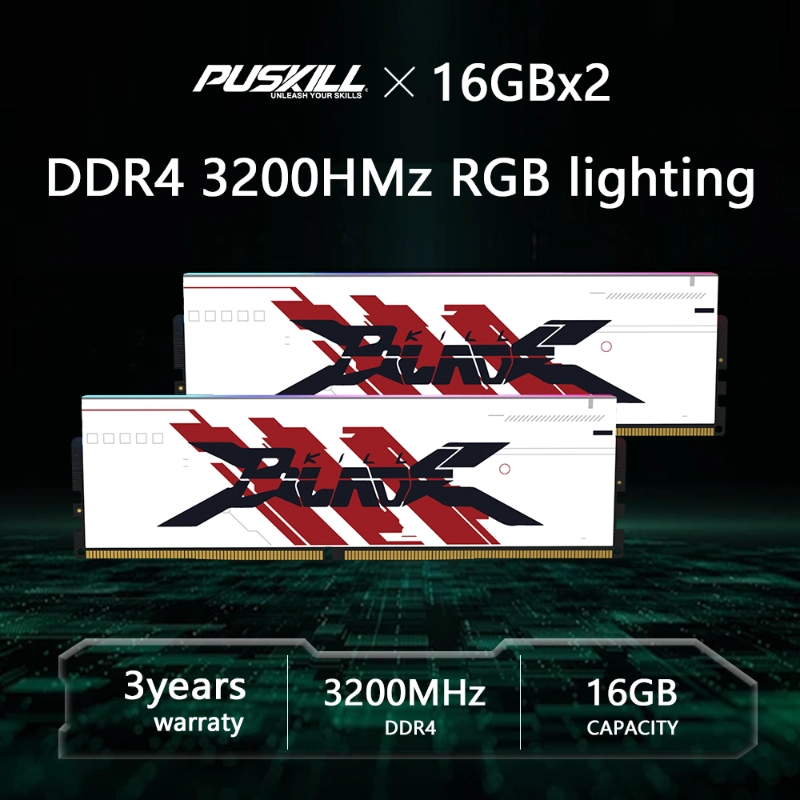
Puskill offers DDR4 RGB memory in 8GB, 16GB, and 32GB capacities. Its frequency options include 2666MHz, 3200MHz, and 3600MHz. Furthermore, selected configurations support CL16, CL19, and CL22 timings. This range helps wholesalers serve different desktop upgrade requirements.
Does 3600MHz DDR4 RAM Deliver Better Gaming Performance?
Gamers often want smoother gameplay and more consistent frame rates. Meanwhile, competitive players pay attention to frame-time stability. Memory frequency can influence these results. However, improvements vary between games and hardware platforms.
Understanding Memory Frequency and Data Transfer
DDR4 3200MHz offers an effective transfer rate of 3200 MT/s. Meanwhile, DDR4 3600MHz reaches 3600 MT/s. Therefore, the higher-speed option provides approximately twelve-point-five percent more theoretical bandwidth.
However, this difference does not translate directly into twelve-point-five percent more gaming performance. CPU architecture, graphics settings, and game engines also influence results.
For example, CPU-limited games may benefit more from faster memory. Conversely, graphics-intensive games often depend more heavily on GPU performance.
Therefore, buyers should consider the complete system configuration. A 3600MHz module makes sense when the platform supports its rated speed.
Why Do RAM Timings Matter Alongside Frequency?
Some gamers compare frequency alone. However, memory latency also affects responsiveness. Consequently, buyers should evaluate both frequency and CAS latency.
How CL16, CL19, and CL22 Affect Memory Response
CAS latency measures clock cycles before memory returns requested data. Lower values generally indicate fewer cycles. However, actual latency also depends on operating frequency.
For DDR4 memory, the approximate CAS latency calculation uses:
For example:
- DDR4 3200MHz CL16: approximately ten nanoseconds.
- DDR4 3600MHz CL16: approximately eight-point-nine nanoseconds.
- DDR4 3600MHz CL18: approximately ten nanoseconds.
Therefore, a higher frequency does not automatically guarantee lower latency. Buyers should compare complete specifications.
Puskill offers multiple timing configurations. This flexibility helps distributors select products for different performance and price requirements.
Is a 16GB DDR4 RAM Module Enough for Modern Gaming?
Many gamers still use sixteen gigabytes of memory. This capacity can support numerous popular games. Additionally, it suits everyday browsing and general desktop tasks.
However, players often run several applications simultaneously. For example, streaming software, voice chat, and browser tabs consume additional memory.
Choosing Between 8GB, 16GB, and 32GB
Puskill offers three capacity options:
- 8GB: Suitable for entry-level upgrades and selected office systems.
- 16GB: A practical choice for mainstream gaming desktops.
- 32GB: Offers additional capacity for multitasking and content creation.
For distributors, this range supports multiple customer segments. Moreover, buyers can develop different product bundles according to retail demand.
A sixteen-gigabyte configuration may also use two eight-gigabyte modules. Dual-channel operation can improve memory bandwidth. Nevertheless, buyers should check motherboard support and module compatibility.
How Important Are Cooling and Compatibility?
A gaming memory upgrade should match the motherboard and processor. Otherwise, users may need additional configuration steps.
Furthermore, RGB lighting and heat spreaders influence product appeal. These features matter to gamers building customized desktop systems.
Aluminum Heat Spreaders and RGB Lighting
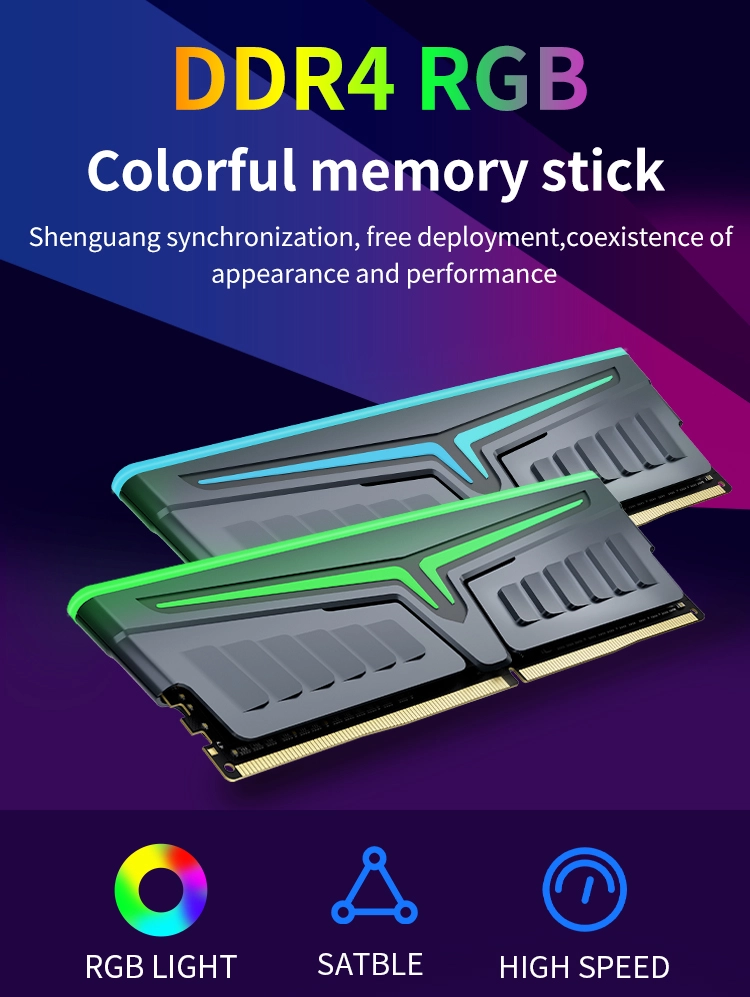
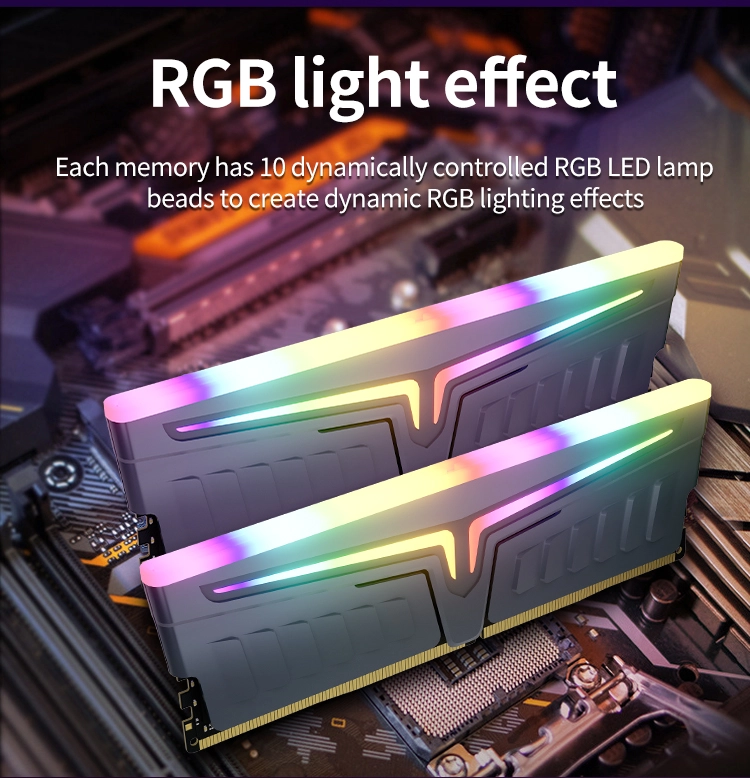
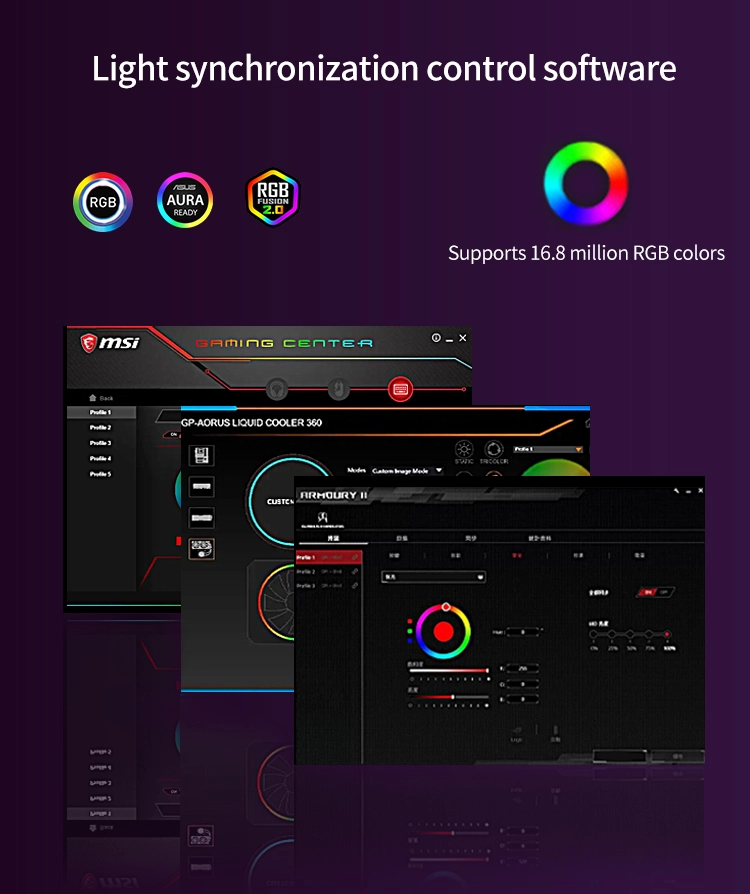
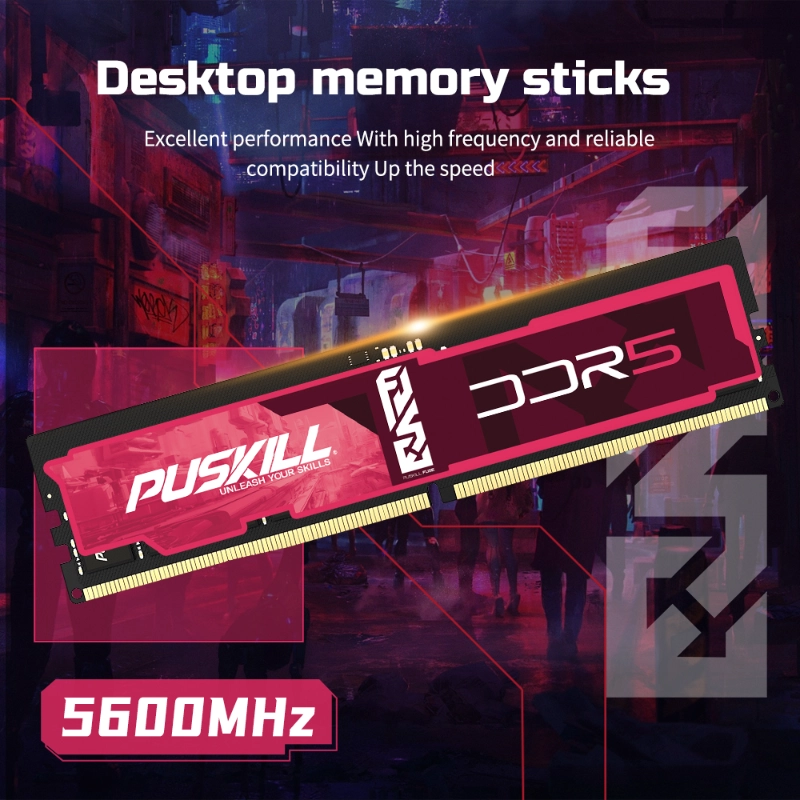
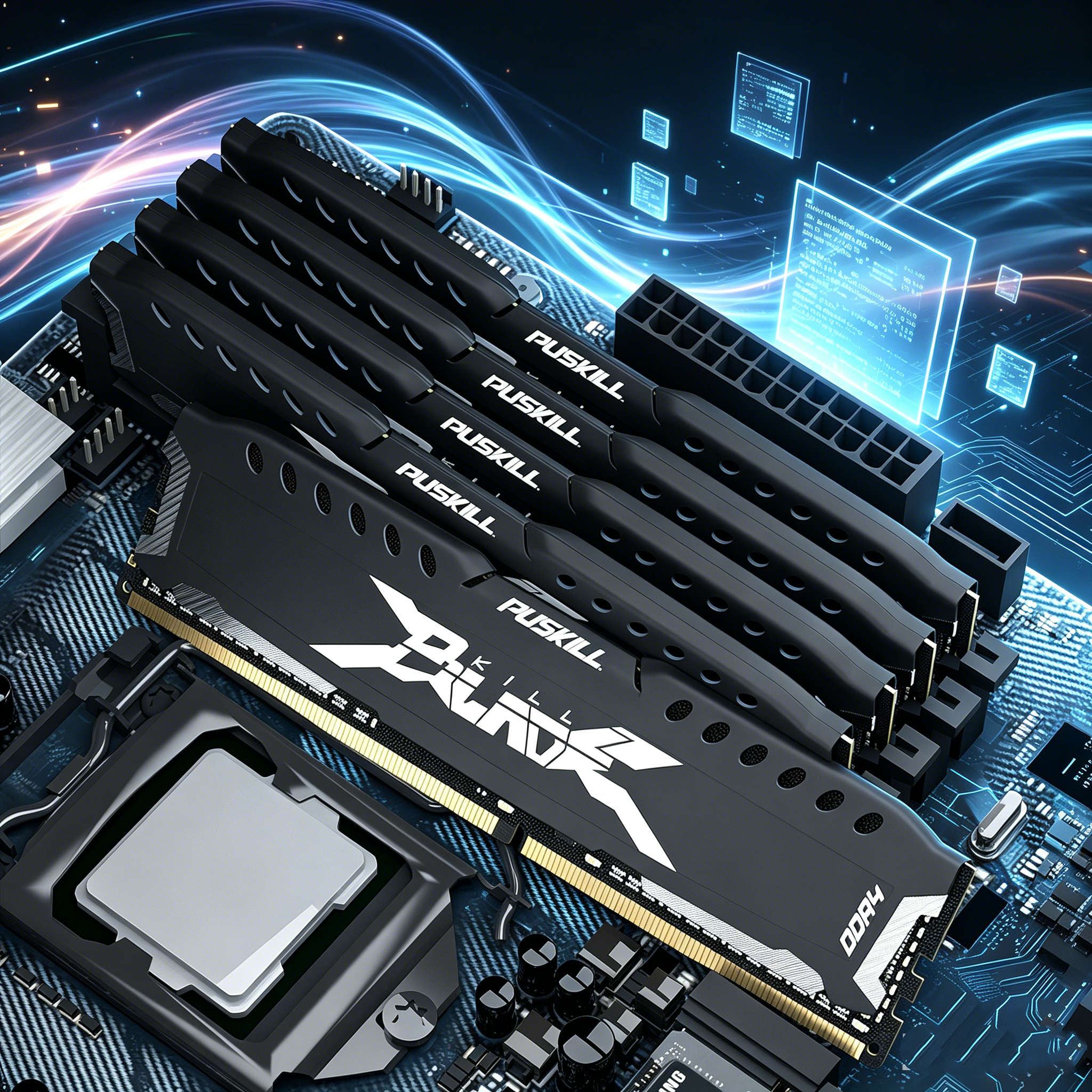
Puskill DDR4 RGB memory features an aluminum heat spreader. Its design supports heat dissipation around the memory chips. Additionally, programmable RGB lighting adds visual customization.
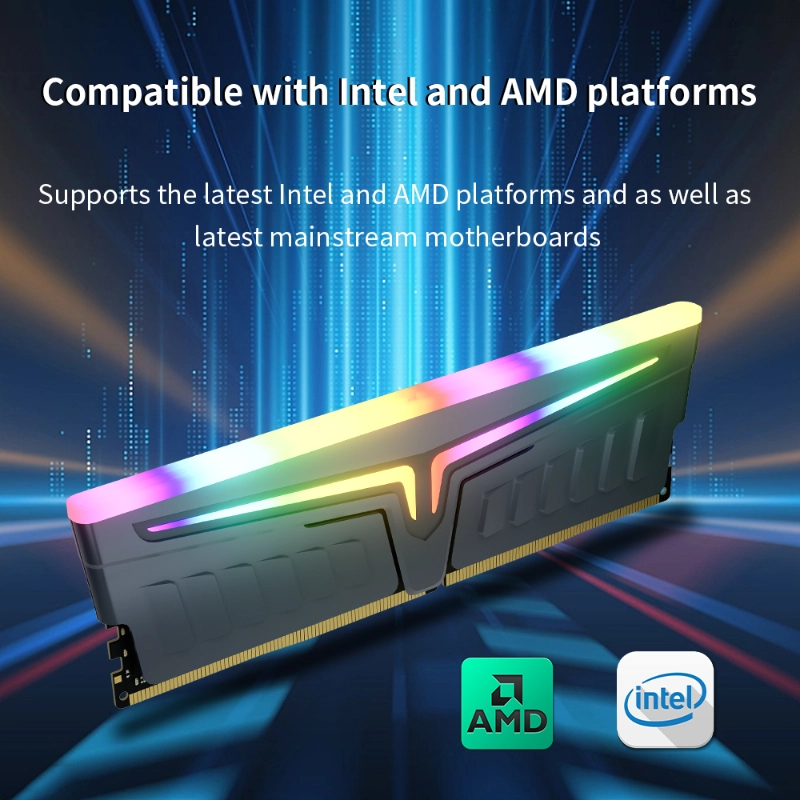
The product supports mainstream Intel and AMD platforms. It also lists Intel XMP 2.0 support. Buyers should confirm the specific motherboard and BIOS compatibility.
Rated memory speeds may require enabling the appropriate BIOS profile. Furthermore, some processors and motherboards may use different supported memory limits.
For B2B buyers, reliable component selection and testing deserve attention. Puskill offers chips from Hynix, Micron, Samsung, and PUSKILL. This sourcing range supports different product configurations.
Which DDR4 RAM Specifications Should Wholesale Buyers Compare?
For distributors, purchasing decisions involve performance and supply considerations. Therefore, comparing capacity, frequency, timing, and certification helps establish suitable product combinations.
| Evaluation item | Puskill DDR4 specifications | Purchasing value |
|---|---|---|
| Capacity | 8GB / 16GB / 32GB | Multiple market segments |
| Frequency | 2666 / 3200 / 3600 MT/s | Flexible performance options |
| Timing | CL16 / CL19 / CL22 | Different latency configurations |
| Voltage | 1.35 volts | Confirm platform requirements |
| Memory type | DDR4 | Desktop memory applications |
| Pins | 288-pin | Standard desktop DIMM format |
| Chip options | Hynix / Micron / Samsung / PUSKILL | Multiple component choices |
| Heat spreader | Aluminum | Supports thermal management |
| RGB lighting | Programmable | Supports gaming PC aesthetics |
| Certifications | FCC / CE / RoHS | Supports market compliance requirements |
| Customization | OEM / ODM available | Supports private-label projects |
| Warranty | Lifetime warranty | Long-term purchasing support |
For customized orders, buyers should confirm exact IC specifications. They should also verify RGB synchronization and tested motherboard compatibility.
Explore our DDR4 memory product range at product-category. You can review available capacities and frequency configurations.
How Can Gaming Brands Choose a Cost-Effective RAM Supplier?
A competitive memory product needs consistent quality. Meanwhile, distributors need flexible specifications and dependable after-sales support.
Puskill provides 8GB, 16GB, and 32GB DDR4 configurations. Its frequency range covers 2666MHz through 3600MHz. Additionally, OEM and ODM services support customized wholesale requirements.
Before ordering, buyers should request sample testing. They should also check memory stability, RGB functions, and compatibility documentation.
For further technical information, visit our DDR4 memory technical guide.
Should You Choose DDR4 3200MHz or 3600MHz?
DDR4 3600MHz offers higher theoretical bandwidth. Therefore, it can suit gaming systems with compatible processors and motherboards. However, DDR4 3200MHz remains a balanced option for many desktop builds.
Ultimately, the best choice depends on frequency support, timings, capacity, and budget. For B2B buyers, Puskill provides several configurations for different customer groups.
Contact Puskill to discuss DDR4 RAM 16GB module specifications, OEM customization, and wholesale pricing. Build a competitive memory product range with flexible capacity and frequency options.

Add comment