
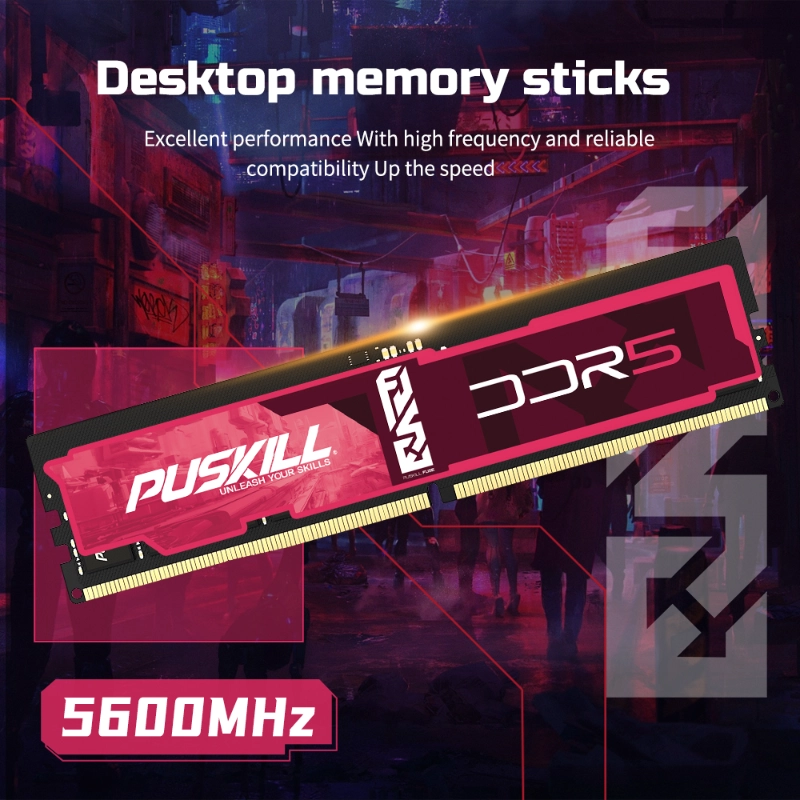
Demand for high performance DDR5 RAM continues to attract attention as artificial intelligence infrastructure expands. AI servers require substantial memory resources, while PC manufacturers and distributors need reliable component supplies. Consequently, changing production priorities can influence memory availability, purchasing costs, and delivery schedules. For wholesalers, choosing a suitable memory supplier now requires careful specification checks, inventory planning, and cost management.
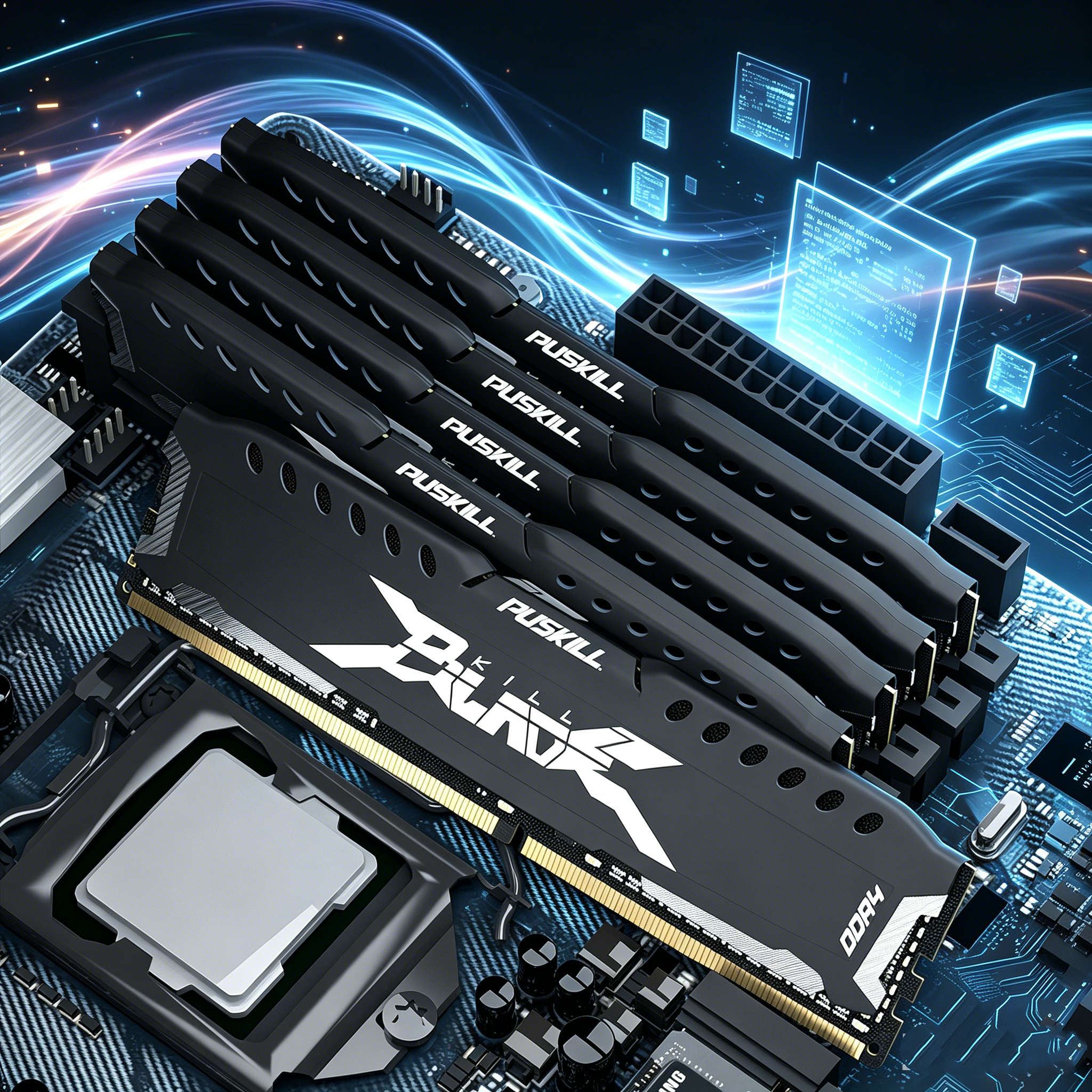
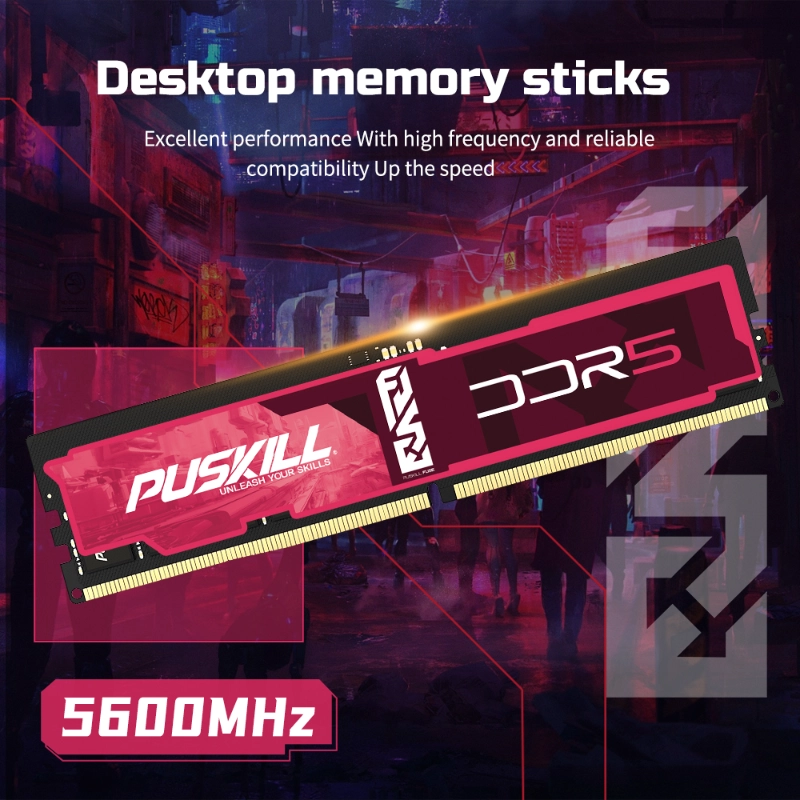
PUSKILL offers memory products with OEM and ODM support. However, buyers must distinguish desktop DDR5 products from older laptop memory before placing orders. Therefore, understanding market trends and verifying product specifications can support more informed purchasing decisions.
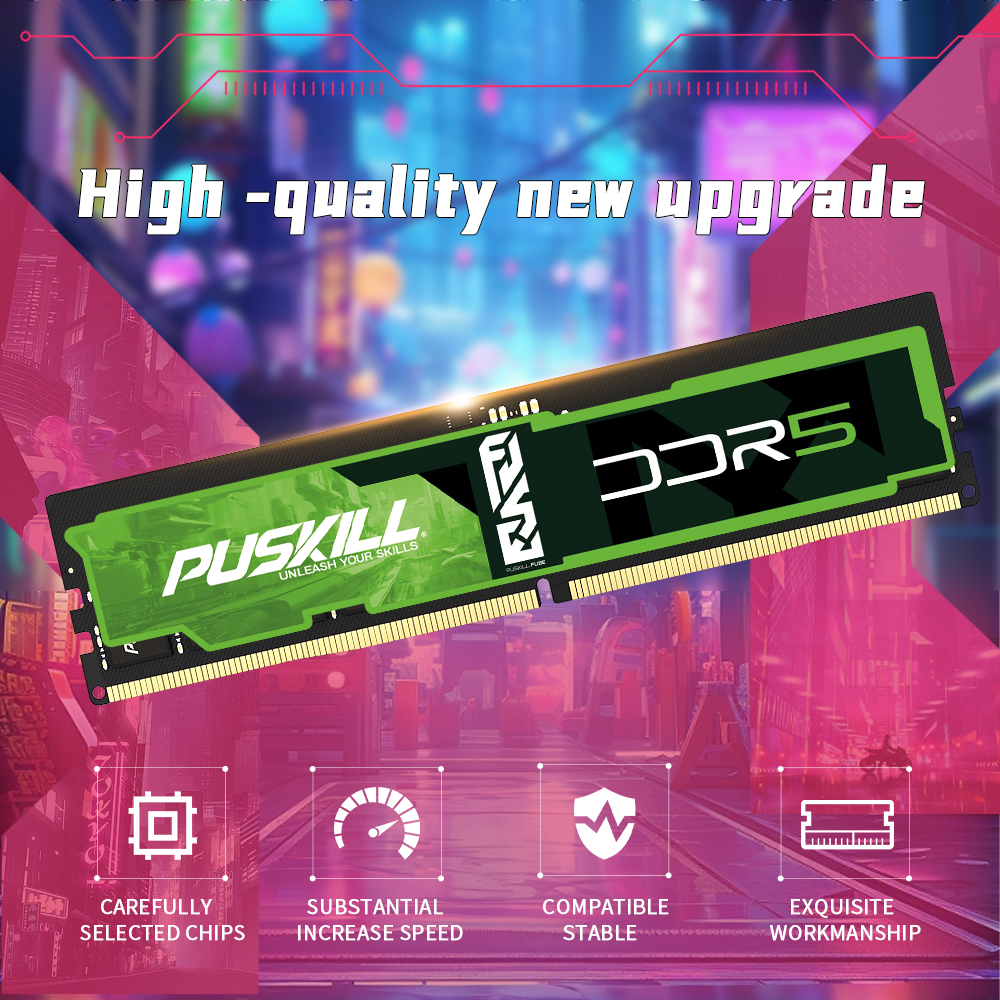
How Does AI Demand Affect DDR5 Memory Supply?
Understand server demand and manufacturing priorities
AI workloads require powerful computing infrastructure. Therefore, cloud providers continue investing in servers and associated memory systems. These systems can use high-bandwidth memory and server-grade DRAM for different workloads.
Meanwhile, memory manufacturers must allocate production capacity across several product categories. High-bandwidth memory production also places pressure on shared manufacturing resources. Consequently, conventional DRAM availability can tighten when suppliers prioritize advanced memory and server applications.
TrendForce’s September 2026 report projected conventional DRAM contract prices would rise ten to fifteen percent quarter over quarter in the fourth quarter. The report also highlighted potential PC DRAM supply pressure in 2027. Read the latest TrendForce memory market assessment for further context.
However, these forecasts describe market trends rather than guaranteed prices for every DDR5 module. Different capacities, module types, supplier agreements, and order volumes can produce different purchasing conditions.
For distributors, this uncertainty makes supplier communication increasingly important. Therefore, request updated quotations and confirm available inventory before committing to customer delivery dates.
What Supply Risks Should Wholesale Buyers Monitor?
Plan purchasing around lead times and inventory needs
Supply pressure can affect procurement in several ways. For example, suppliers may revise quotations as component costs change. Additionally, certain capacities or configurations may have different availability.
Rather than relying on one large purchase, buyers can establish a phased procurement plan. First, identify the memory specifications required by target customers. Next, estimate demand across upcoming sales periods. Finally, discuss allocation and replenishment schedules with suppliers.
This approach helps businesses balance stock availability against cash flow. Moreover, it supports more consistent planning when market prices fluctuate.
For high-volume orders, ask suppliers to clarify quotation validity, minimum order quantities, and delivery terms. Also, confirm whether repeat orders can maintain the same specifications. These details matter when distributors support ongoing business customers.
Explore our Memory Products and Wholesale Options to review available memory solutions. Then request a quotation based on your preferred capacity, module type, and target order quantity.
How Can Buyers Verify DDR5 Specifications?
Match memory generation with the target device
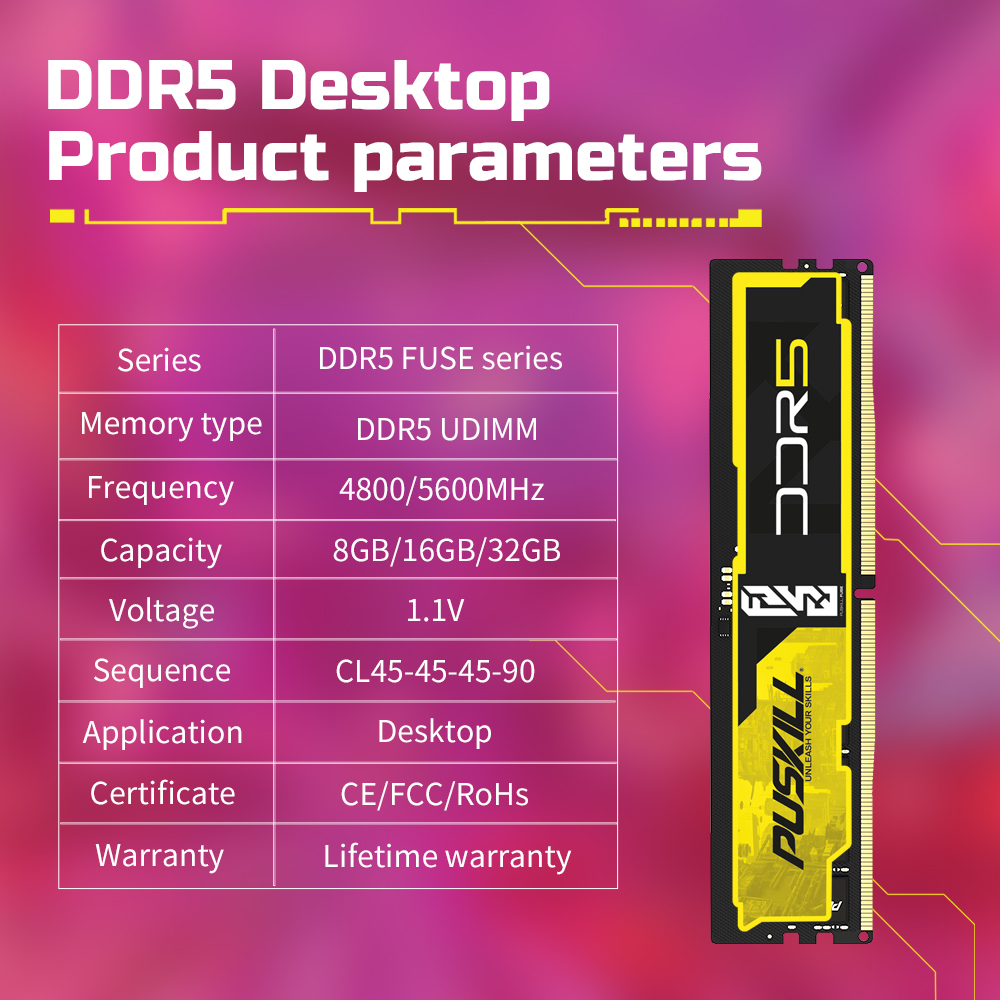
Product specifications deserve particular attention when sourcing high performance DDR5 RAM. Although product titles may mention a generation or capacity, buyers should verify every technical field.
DDR5 and DDR3L represent different memory generations. Moreover, desktop and laptop modules use different physical formats. Therefore, buyers should confirm memory generation, module type, supported capacity, and motherboard compatibility before ordering.
The supplied PUSKILL product listing contains a specification inconsistency. Its title identifies the product as “Desktop DDR5 8GB,” yet its detailed fields describe DDR3L laptop memory. Those fields specify four or eight gigabytes, 1333 or 1600 megahertz, and a 204-pin SO-DIMM format.
Consequently, buyers should verify the actual product code before using this item as a DDR5 purchasing reference. The detailed specifications should not be advertised as confirmed DDR5 specifications without supplier clarification.
For genuine high performance DDR5 RAM orders, request a complete datasheet. Confirm the memory generation, supported frequencies, operating voltage, timing, module dimensions, and compatibility requirements. Additionally, ask the supplier to identify the exact chip configuration.
Consult our Memory Compatibility and Technical Guide to support specification checks before procurement.
Which Quality and Compliance Details Matter?
Evaluate consistency, documentation, and customization
A competitive wholesale price matters, but product consistency also influences long-term value. Therefore, buyers should assess sample quality, supplier communication, and inspection procedures.
PUSKILL lists support for OEM and ODM services. Its supplied product information also references chips from Hynix, Micron, Samsung, or PUSKILL. However, buyers should confirm which chips apply to each specific order.
Furthermore, request documentation that matches the selected product. The supplied listing names FCC, CE, and RoHS certifications. Nevertheless, buyers should verify the relevant documents, product coverage, and destination-market requirements before making compliance claims.
A clear inspection plan can also reduce purchasing uncertainty. For example, verify module identification, electrical specifications, and packaging labels. Additionally, agree on procedures for handling discrepancies before shipment.
These checks help distributors protect product consistency while maintaining competitive purchasing costs. They also support clearer communication with downstream customers.
Which Specifications Should Buyers Compare Before Ordering?
Use a procurement checklist
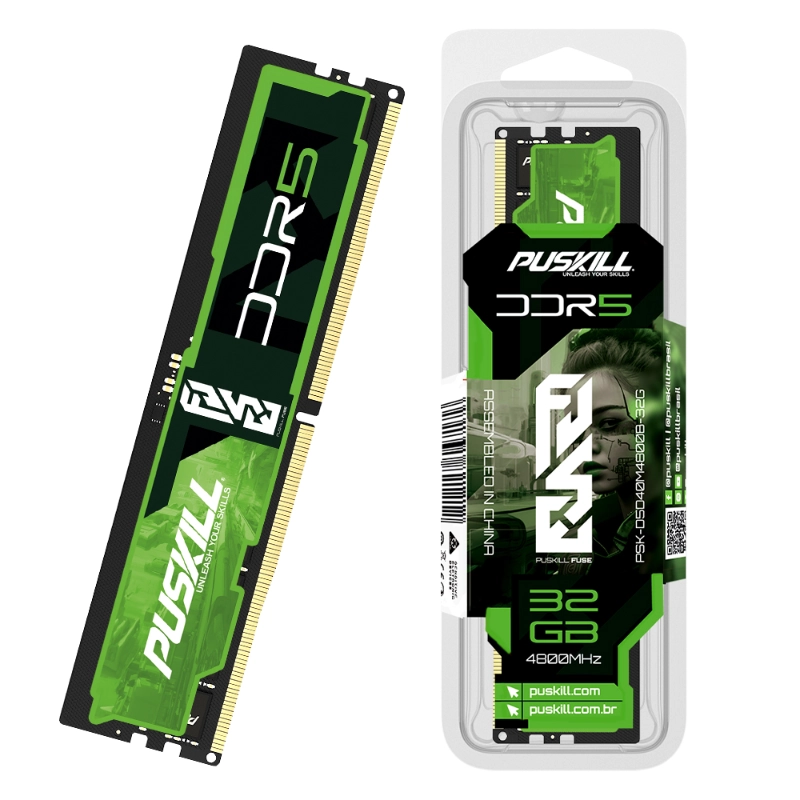
The following table separates the current listing details from the information buyers should confirm for DDR5 projects.
| Purchasing factor | Current supplied listing | DDR5 buyer action |
|---|---|---|
| Product classification | Title says desktop DDR5; details say DDR3L | Confirm exact memory generation |
| Capacity | Four or eight gigabytes | Confirm required capacity |
| Frequency | 1333 or 1600 megahertz | Request verified DDR5 frequency options |
| Module format | 204-pin SO-DIMM | Confirm desktop or laptop compatibility |
| Operating voltage | One point three five volts | Verify the actual module datasheet |
| Chip options | Hynix, Micron, Samsung, or PUSKILL | Confirm approved chip sourcing |
| Certifications | FCC, CE, and RoHS listed | Request applicable documents |
| OEM and ODM | Support listed | Confirm customization terms |
| Packaging | Bulk or retail packaging | Specify packaging requirements |
| Warranty | Lifetime warranty listed | Confirm written warranty conditions |
Before confirming a purchase, buyers should reconcile the product classification discrepancy. Additionally, request samples and a written specification sheet for the exact SKU.
For DDR5 sourcing, compare equivalent modules rather than products with similar titles. This approach creates a more meaningful assessment of quality, compatibility, and unit cost.
Build a More Resilient Memory Sourcing Plan
AI infrastructure demand can tighten memory supply by influencing production priorities and procurement patterns. Meanwhile, buyers face changing costs and different availability across memory categories.
For distributors, high performance DDR5 RAM sourcing should begin with verified specifications. Next, confirm current stock, quotation validity, and delivery schedules. Finally, evaluate quality documentation and OEM or ODM support.
PUSKILL provides a starting point for discussing memory sourcing and customization. However, the supplied listing requires clarification before buyers treat it as a DDR5 product. Request the correct datasheet and quotation for your target module.
With accurate specifications and practical procurement planning, businesses can make better-informed purchasing decisions while pursuing reliable supply and competitive wholesale value.

Add comment