

Choosing memory involves more than checking speed and capacity. Today, PC manufacturers and hardware distributors also consider power consumption, system stability, and long-term value.
Energy efficient DDR5 RAM addresses these needs through improved memory architecture and power management. It supports high-speed data transfer while maintaining a standard operating voltage of 1.1 volts.
Moreover, modern DDR5 memory offers different capacities and frequencies. These options serve gaming desktops, office computers, and professional workstations.
For B2B buyers, the right DDR5 RAM solution can improve product competitiveness. It can also support better inventory planning and customer satisfaction.

How Does DDR5 RAM Balance Performance and Power Consumption?
Many buyers ask whether higher memory frequencies always require more power. The answer depends on memory design and operating conditions.
What Makes DDR5 More Energy Efficient?
DDR5 RAM introduces an integrated power management circuit. This design moves certain power regulation functions onto the memory module.
Furthermore, DDR5 memory uses a dual 32-bit sub-channel architecture. It improves data access flexibility and supports higher bandwidth.
Standard DDR5 memory operates at 1.1 volts. This provides an efficient foundation for modern desktop systems.
For example, PUSKILL offers several high-speed memory frequency options:
- 4800 MHz for mainstream desktop computers.
- 5200 MHz for balanced computing performance.
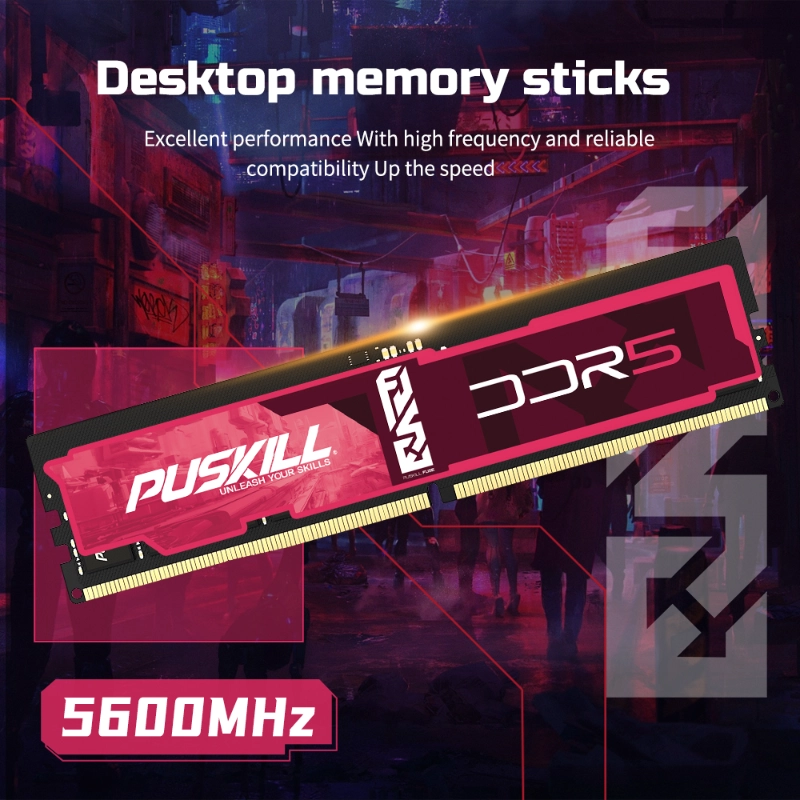
- 5600 MHz for multitasking and gaming.
- 6000 MHz for demanding applications.
Therefore, distributors can select suitable configurations for different customer groups. They can also build product lines around different performance requirements.
Welcome to browse our DDR5 memory products to discover more memory solutions for different PC applications and wholesale purchasing needs.
Which DDR5 RAM Capacity Suits Different PC Applications?
Capacity directly affects how smoothly a computer handles multiple tasks. However, different customers have different memory requirements.
How Should Buyers Select Memory Capacity?
An 8 GB DDR5 memory module suits entry-level desktop configurations. It provides a practical option for basic office tasks and general computing.
Meanwhile, 16 GB offers more flexibility for everyday gaming and multitasking. It also suits many mainstream desktop configurations.
For professional users, 32 GB provides additional working space. Video editing, 3D rendering, and demanding applications can benefit from this capacity.
PUSKILL supports 8 GB, 16 GB, and 32 GB DDR5 RAM modules. This flexibility helps wholesalers serve different market segments.
Additionally, OEM and ODM services allow buyers to discuss custom DDR5 memory configurations. They can develop product combinations around their target markets.

Can 6000 MHz DDR5 RAM Improve Gaming and Content Creation?
Gaming and creative applications often process large amounts of data. Therefore, memory bandwidth plays an important role.
Why Consider 6000 MHz DDR5 Memory?
A 6000 MHz DDR5 RAM module offers a theoretical peak bandwidth of 48 GB/s per module. Actual performance depends on the memory configuration and platform.
For esports gaming, faster memory can support smoother data processing. However, actual frame rates also depend on the CPU and GPU.
For content creators, higher bandwidth can benefit demanding workflows. These include 4K video editing and 3D rendering.
PUSKILL offers CL38 and CL48 timing options. Buyers can select suitable gaming RAM configurations according to platform compatibility and performance targets.
Moreover, DDR5 memory compatibility matters during system integration. Buyers should check motherboard specifications and supported memory profiles.
Welcome to read our DDR5 memory technical guides to learn more about memory performance, compatibility, and selection tips.

How Can Buyers Evaluate DDR5 RAM Quality and Reliability?
Price matters in wholesale purchasing. However, consistent quality also affects inventory value and customer satisfaction.
Which Manufacturing Details Should Buyers Check?
First, consider the memory chips. PUSKILL supports chips from Hynix, Micron, Samsung, and PUSKILL.
Second, examine PCB quality and module construction. Stable components help support consistent operation across different applications.
Third, check certification and quality documentation. PUSKILL DDR5 memory modules support FCC, CE, and RoHS requirements.
The modules also feature On-Die ECC technology. It helps detect and correct certain internal memory errors.
However, On-Die ECC does not replace system-level ECC memory. Buyers should distinguish between these functions when selecting products.
DDR5 RAM Specifications for Wholesale Buyers
| Specification | PUSKILL DDR5 Memory |
|---|---|
| Product type | DDR5 |
| Capacity | 8 GB / 16 GB / 32 GB |
| Frequency | 4800 / 5200 / 5600 / 6000 MHz |
| Voltage | 1.1 V / 1.4 V |
| Timing | CL38 / CL48 |
| Pin count | 288 pins |
| Chip options | Hynix / Micron / Samsung / PUSKILL |
| Chip configuration | 8 IC / 16 IC |
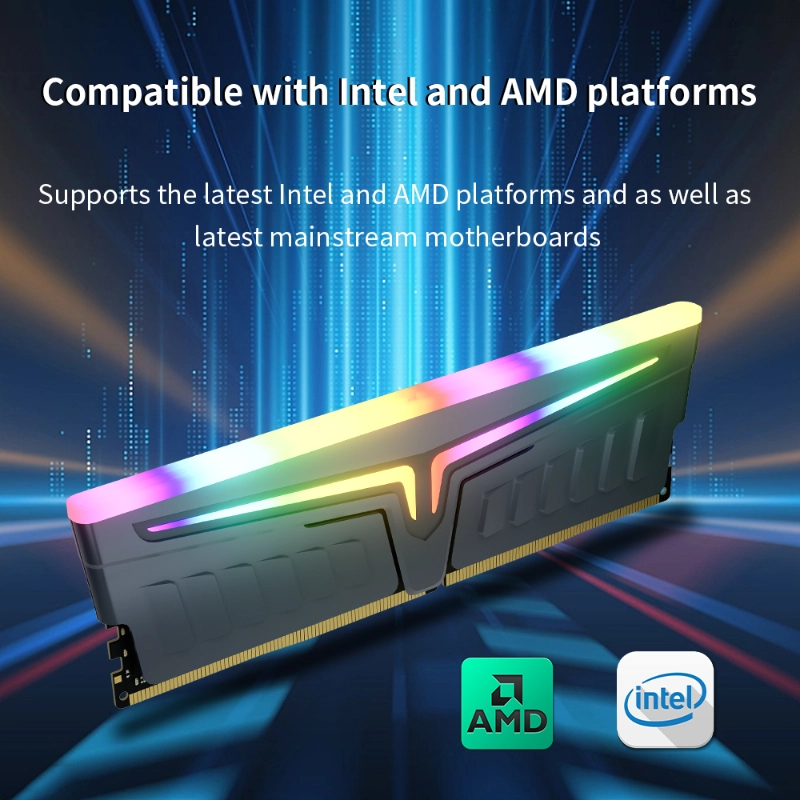
| Compatibility | AMD / Intel |
| Certification | FCC / CE / RoHS |
| PCB colors | Green / Black |
| Packaging | Bulk / Retail |
| Warranty | Lifetime warranty |
| Customization | OEM / ODM support |
These options help distributors build flexible wholesale DDR5 RAM product portfolios. Furthermore, bulk packaging can support different wholesale purchasing requirements.
Why Should Distributors Consider Customized DDR5 RAM?
Different markets require different product configurations. Therefore, a flexible supplier can create additional value for distributors and PC brands.
How Does OEM and ODM Support Help Buyers?
PUSKILL supports OEM and ODM cooperation. Buyers can discuss memory capacity, frequency, packaging, and product presentation.
For example, gaming hardware brands may prefer 6000 MHz DDR5 RAM configurations. Meanwhile, office computer suppliers may prioritize practical capacities and competitive pricing.
In addition, flexible packaging supports different sales channels. Retail packaging suits branded distribution, while bulk packaging helps simplify wholesale procurement.
A lifetime warranty also provides additional purchasing confidence. Combined with multiple chip options, these features support long-term cooperation.
For buyers seeking energy efficient DDR5 RAM, product consistency and supply flexibility deserve equal attention.
Welcome to browse our DDR5 RAM solutions to explore flexible capacities, frequency options, and OEM/ODM services for your business.
Build a Competitive DDR5 Memory Product Line
Selecting memory requires a balance of performance, efficiency, compatibility, and purchasing cost. Therefore, buyers should evaluate the complete product offering.
PUSKILL provides DDR5 memory options from 4800 MHz to 6000 MHz. Its 8 GB, 16 GB, and 32 GB capacities serve different desktop applications.
Furthermore, OEM and ODM support helps wholesalers develop suitable custom DDR5 memory combinations. FCC, CE, and RoHS certifications also support different market requirements.
Whether you supply gaming PCs or desktop hardware, PUSKILL offers practical DDR5 RAM solutions. Contact our team to discuss competitive wholesale DDR5 RAM pricing and customization options.
Frequently Asked Questions
Q1: Is DDR5 more energy efficient than DDR4?
DDR5 memory operates at a standard 1.1 V. It also introduces improved power management. Actual power consumption depends on module specifications and operating conditions.
Q2: Is 6000 MHz DDR5 RAM suitable for gaming PCs?
Yes, 6000 MHz DDR5 RAM suits many modern gaming configurations. However, buyers should confirm motherboard and processor compatibility.
Q3: Can PUSKILL provide customized DDR5 memory?
Yes. PUSKILL supports OEM and ODM cooperation. Buyers can discuss capacity, frequency, chips, and packaging.
Q4: What warranty does PUSKILL DDR5 RAM offer?
PUSKILL provides a lifetime warranty for its DDR5 RAM products. Buyers can contact the team for specific warranty terms.


Add comment