
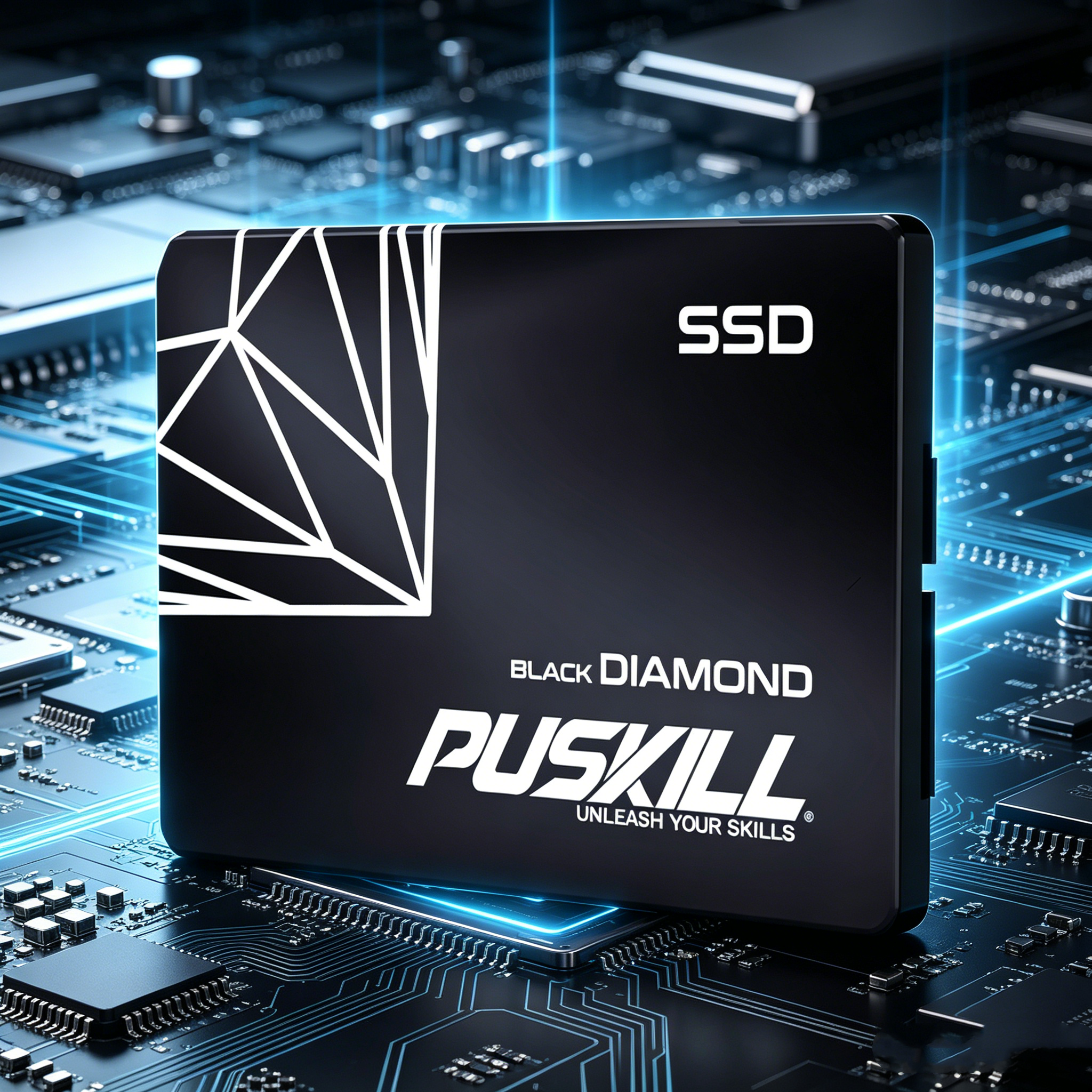
Choosing a 2.5 serial sata ssd requires careful evaluation of performance, compatibility, quality, and total purchasing costs. For B2B distributors, system integrators, and computer hardware resellers, the right 2.5-inch SATA SSD supports consistent product planning. Moreover, buyers must consider capacity options, warranty coverage, and technical documentation. Procurement teams should also verify market-specific requirements, including applicable certifications and lead-free compliance. Therefore, a structured evaluation helps businesses balance reliable performance with competitive bulk purchasing costs.

How Do You Select the Right SSD Capacities for Bulk Orders?
Match storage capacity to customer requirements
Different customers need different storage configurations. For example, office computers often require balanced capacity and affordability. Meanwhile, industrial terminals and embedded systems may prioritize operating stability and compatibility.
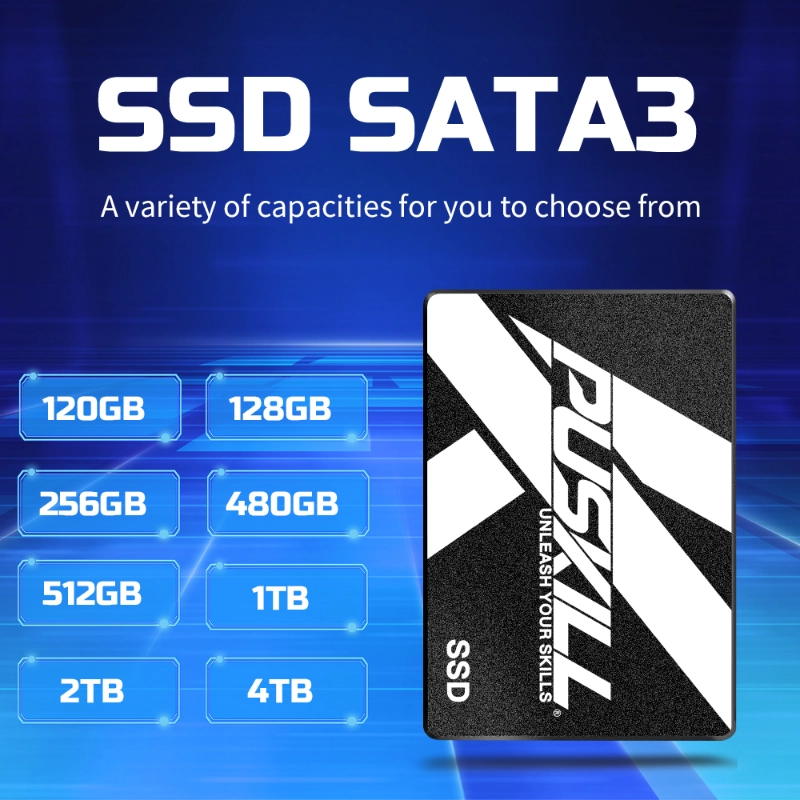
A flexible 2.5 serial sata ssd range helps distributors serve multiple customer segments. The PUSKILL SATA III SSD offers capacities from 120 gigabytes to 2 terabytes. Available options include 120, 128, 240, 256, 480, and 512 gigabytes. Higher-capacity options include 1 terabyte and 2 terabytes.
Consequently, buyers can plan inventory according to actual sales demand. Standardizing popular capacities can also simplify stock management. Before placing bulk orders, review expected consumption and preferred customer configurations.
For suitable product categories, explore bulk SSD product options.
How Can You Verify 2.5-Inch SATA SSD Compatibility?
Confirm the interface and power requirements
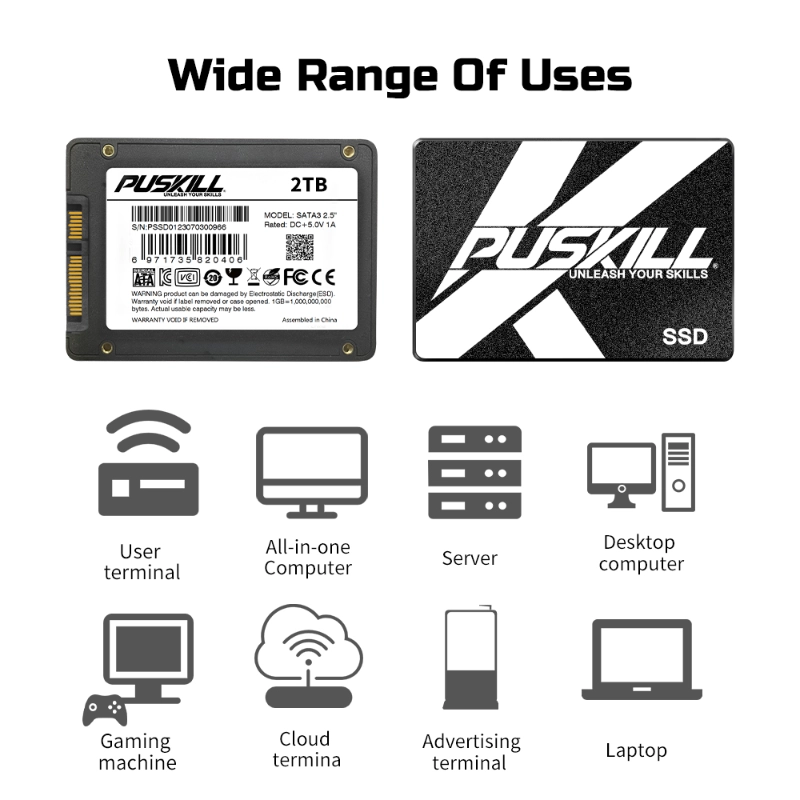
Physical fit and interface compatibility should guide purchasing decisions. A 2.5-inch SATA SSD suits devices designed for compatible two-and-a-half-inch SATA storage. However, buyers should verify the host device’s interface, available space, and mounting requirements.
The PUSKILL model uses a SATA III interface and requires 5 volts. These specifications help procurement teams assess compatibility before ordering. Nevertheless, the exact device configuration remains important.
Furthermore, check whether target systems support the selected storage capacity. Older computers and specialized equipment may have platform-specific limitations. Therefore, request sample units for representative systems before approving a large shipment.
This process helps reduce avoidable compatibility issues. It also gives resellers clearer guidance when recommending a 2.5 serial sata ssd to customers.
Which Performance Specifications Matter Most for Bulk Purchasing?
Evaluate read and write speeds against real workloads
Sequential speed is useful when comparing SSD specifications. However, buyers should evaluate it alongside application requirements and the intended workload. The PUSKILL SATA III SSD lists read speeds of 520 megabytes per second. Its specified write speed reaches 500 megabytes per second.
These figures provide a practical reference for everyday computing and storage upgrades. For example, compatible office systems may benefit from responsive application loading and file transfers. Meanwhile, specialized workloads may require additional performance information.
Therefore, ask suppliers about test conditions and sustained workload behavior. Also, request details about NAND configuration, controller specifications, endurance ratings, and available batch testing. The supplied product information does not specify every measurement.
For further evaluation, visit SSD technical guides. This information helps procurement teams compare products against real deployment needs.
How Do You Assess SSD Quality and Long-Term Reliability?
Review construction, operating conditions, and warranty terms
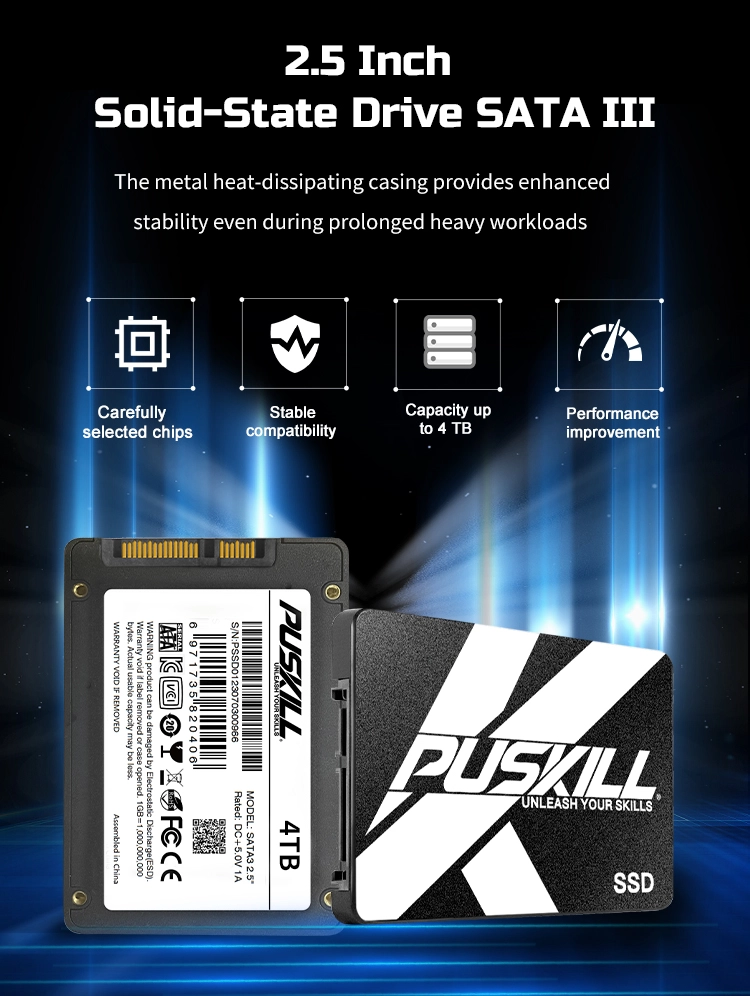
Product quality influences maintenance planning and customer satisfaction. Therefore, buyers should examine construction details and documented quality-control procedures. The PUSKILL 2.5 serial sata ssd features a metal housing and solid-state storage design.
Its product description highlights quiet operation and resistance to shock and vibration. These characteristics may suit desktops, laptops, and other compatible computing systems. However, buyers should confirm environmental and endurance requirements for specialized installations.
The specified operating temperature ranges from 0 to 70 degrees Celsius. Its storage temperature ranges from minus 40 to 85 degrees Celsius. Additionally, the product carries a three-year warranty.
Before ordering, clarify warranty coverage, claim procedures, and batch traceability. Request applicable certifications and supporting documents where destination markets require them. No specific certification details appear in the supplied specifications.
How Can Businesses Improve Bulk Purchasing Value?
Calculate total procurement costs, not unit price alone
A competitive quotation should support predictable purchasing and resale margins. However, the lowest initial price may not represent the best overall value. Businesses should evaluate product specifications, warranty terms, packaging, delivery schedules, and order quantities together.
For a bulk 2.5 SATA SSD purchase, begin by defining the required capacity mix. Next, confirm the agreed specifications and sample approval process. Then, compare supplier quotations using consistent requirements.
Furthermore, clarify lead times and procedures for handling quality concerns. These details help distributors plan replenishment and serve recurring customer orders. A dependable 2.5 SATA SSD supplier should communicate specifications and commercial terms clearly.
Finally, assess whether the selected product fits the intended customer base. This approach supports competitive pricing without overlooking practical quality requirements.
Key Specifications for PUSKILL 2.5 Serial SATA SSD
| Specification | PUSKILL SSD | Bulk Purchasing Consideration |
|---|---|---|
| Form factor | 2.5 inches | Verify physical fit |
| Interface | SATA III | Confirm host compatibility |
| Capacities | 120, 128, 240, 256, 480, 512 gigabytes; 1 and 2 terabytes | Select the appropriate inventory mix |
| Read speed | Up to 520 megabytes per second | Confirm test conditions |
| Write speed | Up to 500 megabytes per second | Match workload requirements |
| Input voltage | 5 volts | Verify device requirements |
| Operating temperature | 0 to 70 degrees Celsius | Check deployment conditions |
| Storage temperature | Minus 40 to 85 degrees Celsius | Check warehousing conditions |
| Housing | Metal | Review construction requirements |
| Warranty | Three years | Confirm coverage and claim procedures |
| Certifications | Not specified in supplied information | Request applicable documentation |
Q&A: Common Questions About Bulk 2.5 SATA SSD Purchasing
Q1: Is a 2.5 serial sata ssd suitable for wholesale distribution?
Yes, it can suit distributors serving compatible computer and equipment markets. Multiple capacities also support different storage budgets and customer requirements.
Q2: What makes the PUSKILL SATA III SSD worth evaluating?
It offers multiple capacity choices, specified read and write speeds, a metal housing, and a three-year warranty. These features support practical procurement comparisons.
Q3: What should buyers confirm before placing a large order?
Verify interface compatibility, capacity availability, sample performance, warranty terms, and delivery schedules. Also, request current quality records and any required compliance documents.
Q4: How can businesses obtain better purchasing value?
Compare quotations using the same specifications and commercial terms. Then, evaluate the overall cost alongside product suitability and supplier support. This process helps businesses select a 2.5 serial sata ssd that meets customer needs and supports sustainable resale margins.




Add comment